

{{ Interface.PageTitle }}
Have You Ever Wondered What's Happening Inside Your Body?
Your period is much more than a few days of bleeding each month, it's part of an incredible rhythm your body follows throughout your menstrual cycle (月经周期). From the first day of your period to the day before your next one begins, your hormones work together to prepare your body for ovulation and a possible pregnancy.
Along the way, you may notice changes in your energy, mood, appetite, skin, or even your exercise performance. Once you understand your cycle, these changes start to make a lot more sense. Instead of wondering why you feel different every week, you can learn to work with your body rather than against it. Let's explore the four amazing phases of your cycle.
Menstrual Cycle Phases
The menstrual cycle phases are your body's natural monthly rhythm. Although every woman's cycle is unique, each phase has an important role in supporting reproductive health and overall wellbeing.
- Phase 1: Menstruation
This is where a new cycle begins. During menstruation, your uterus sheds its lining, which leaves your body as your period. This phase usually lasts 3 to 7 days, although every woman is different.
You may experience cramps, bloating, lower back discomfort, or feel a little more tired than usual. Gentle movement, staying hydrated, and getting enough rest can help your body feel more comfortable.
Phase 2: Follicular Phase
Once your period ends, your body starts preparing for the next stage. Inside your ovaries, several tiny follicles begin developing, each containing an immature egg. At the same time, your uterus rebuilds a fresh lining. As oestrogen levels rise, many women feel more energetic, focused, and motivated. This is often a great time for exercise, productivity, and trying something new.
Phase 3: Ovulation
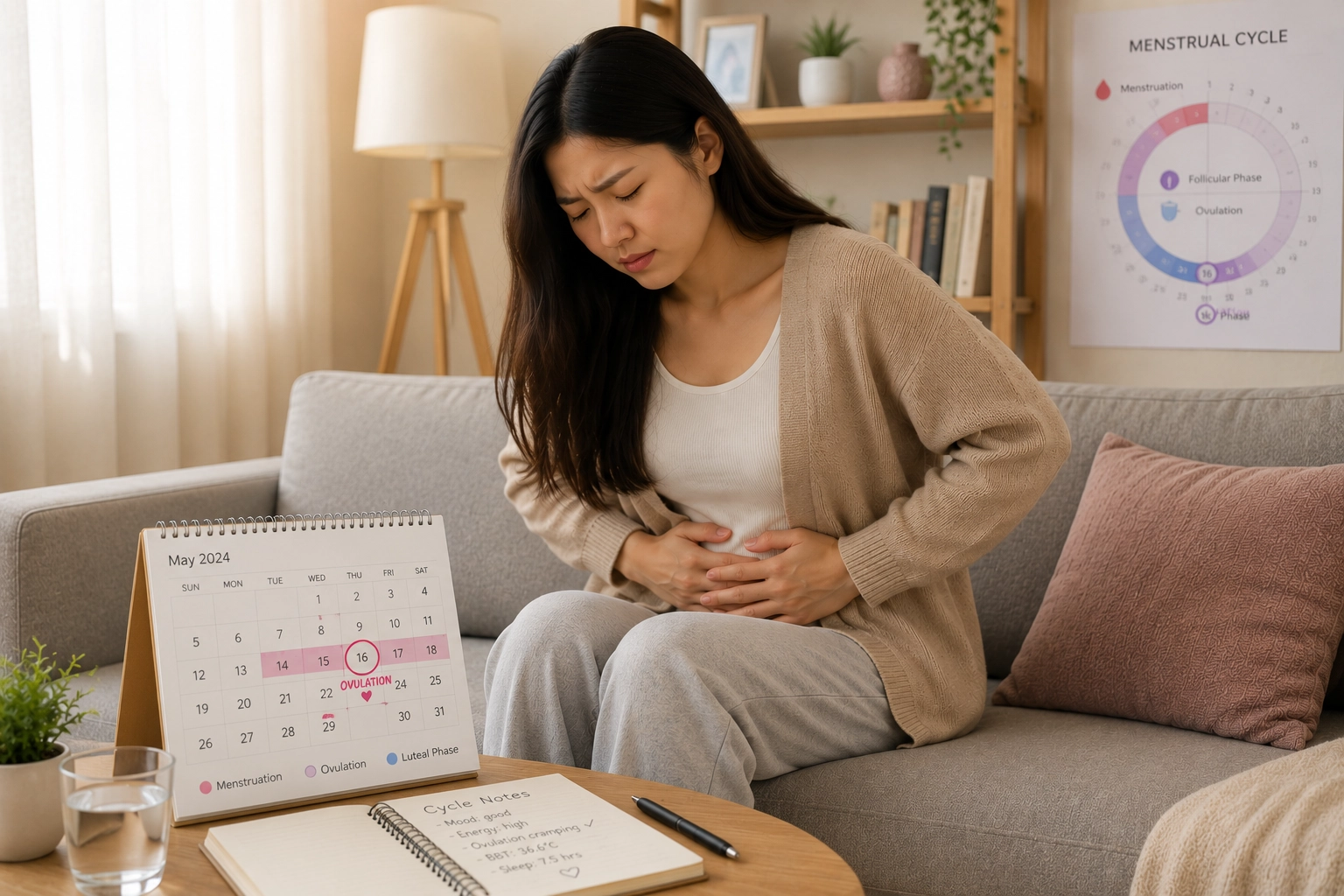
Around the middle of your cycle, usually around day 14. One mature egg is released from the ovary. This is called ovulation and is the most fertile time of your menstrual cycle. Some women experience ovulation cramping, also known as mittelschmerz. It may feel like a mild ache or a brief sharp pain on one side of the lower abdomen and usually lasts only a few hours to one or two days.
While ovulation cramping is common, severe or persistent pain should always be discussed with a healthcare professional.
Phase 4: Luteal Phase
After ovulation, your body prepares for a possible pregnancy. The empty follicle becomes the corpus luteum, producing progesterone to support the uterine lining. If pregnancy doesn't occur, hormone levels gradually decrease, signalling the start of your next period.
During this phase, some women experience PMS symptoms such as bloating, breast tenderness, mood changes, cravings, or fatigue. Looking after yourself with balanced meals, quality sleep, and stress management can make this phase more comfortable.
Ovulation Cramping
Feeling a slight pain halfway through your cycle can be completely normal. Ovulation cramping happens when an egg is released from the ovary. For some women, it's barely noticeable, while others may feel a dull ache or a brief sharp sensation on either the left or right side of the lower abdomen.
Simple self-care, such as drinking enough water, using a warm compress, and resting when needed, can often help. However, if the pain becomes severe, lasts several days, or is accompanied by fever or heavy bleeding, seek medical advice.
Post Period Spotting
Noticing light bleeding after your period has ended can sometimes be worrying, but post period spotting isn't always a sign that something is wrong. In many cases, post period spotting happens because your body is clearing the last bit of menstrual blood or responding to natural hormonal changes.
Stress, changes in contraception, or ovulation may also contribute. If spotting becomes frequent, very heavy, has an unusual smell, or comes with severe pain, it's best to consult a healthcare professional for further evaluation.
Written by: Safiah Latif, Registered Nutritionist (MAHPC), 6/7/2026