

{{ Interface.PageTitle }}
For centuries, edible bird's nest(燕窝) has been enjoyed across Asia as a symbol of nourishment and wellbeing. Once reserved for emperors and royal families because of its rarity, it is now widely enjoyed as part of a healthy lifestyle.
Whether enjoyed as part of a daily wellness routine, during postpartum recovery, or simply as a nourishing delicacy, bird's nest continues to be valued across generations. So, what makes it so special?
In this article, we'll explore bird nest benefits, explain what is bird nest, and discuss why bird nest for postpartum remains a popular choice among new mothers.
What Is Bird Nest (燕窝)
Edible bird's nest has been part of Traditional Chinese Medicine (TCM) and Asian cuisine for hundreds of years. Unlike ordinary bird nests made from twigs and leaves, edible bird's nest is formed almost entirely from the hardened saliva of swiftlets, small birds found throughout Southeast Asia.
After harvesting, the nests are carefully cleaned before being prepared for consumption. Their delicate texture and mild taste make bird’s nest easy to enjoy either on its own or in convenient ready-to-drink products.
Edible bird's nests naturally come in white, yellow, and red varieties. Although red bird's nests are often considered more valuable, some researchers believe their colour develops from minerals absorbed from the cave walls where the nests are attached, rather than from the birds themselves.
Bird's nest naturally contains protein, carbohydrates, minerals, more than 20 amino acids, and bioactive compounds, all of which have attracted growing scientific interest in recent years.
Did you know? Bird's nest is often called the "Caviar of the East" because of its rarity, high value, and long-standing reputation as a premium health food.
Bird Nest Benefits
The nutritional profile of bird's nest has contributed to both its long history in TCM and growing interest in modern nutrition research. Although more human studies are needed, current evidence suggests several potential birdnest benefits.
A Favourite for Skin Health and Healthy Ageing
One of the most well-known bird nest benefits is its association with healthy-looking skin. Bird's nest contains epidermal growth factor (EGF)-like compounds that are being studied for their potential role in supporting skin repair and renewal. Together with its antioxidant properties, these compounds may help protect skin cells from oxidative stress associated with normal ageing.
May Support Immune Function
Bird's nest contains naturally occurring sialic acid, glycoproteins, and antioxidant compounds that have shown promising immune-supporting properties in laboratory and animal studies. These bioactive compounds may help support normal immune function and protect cells from oxidative stress, although more human studies are needed to confirm these effects.
Supports Tissue Repair and Recovery
As a natural source of protein and essential amino acids, bird's nest provides nutrients needed for normal tissue growth and repair. This is one reason bird's nest has traditionally been enjoyed during periods of recovery.
Traditionally Used for Respiratory and Digestive Wellness
In TCM, bird's nest has traditionally been used to support respiratory and digestive health. Historical records describe its traditional use for relieving dry coughs, soothing gastric discomfort, and supporting recovery from general weakness. While these traditional uses have been passed down for generations, modern clinical evidence remains limited.
Bird Nest for Postpartum
One of the most common traditional uses of edible bird's nest is bird nest for postpartum recovery.
Caring for a newborn can be physically and emotionally demanding, making good nutrition especially important after childbirth.
In many Asian cultures, bird's nest (马来西亚燕窝) has traditionally been included in confinement meals because it is considered a nourishing food. Today, many mothers continue this tradition by enjoying either traditional bird’s nest soup or convenient ready-to-drink products that fit more easily into their lifestyle.
Although research on bird nest for postpartum is still limited, it can be enjoyed as part of a healthy, balanced diet during the postpartum period. If you are pregnant or breastfeeding, consult your healthcare professional before introducing new supplements or functional foods into your diet.
How to Enjoy Bird's Nest
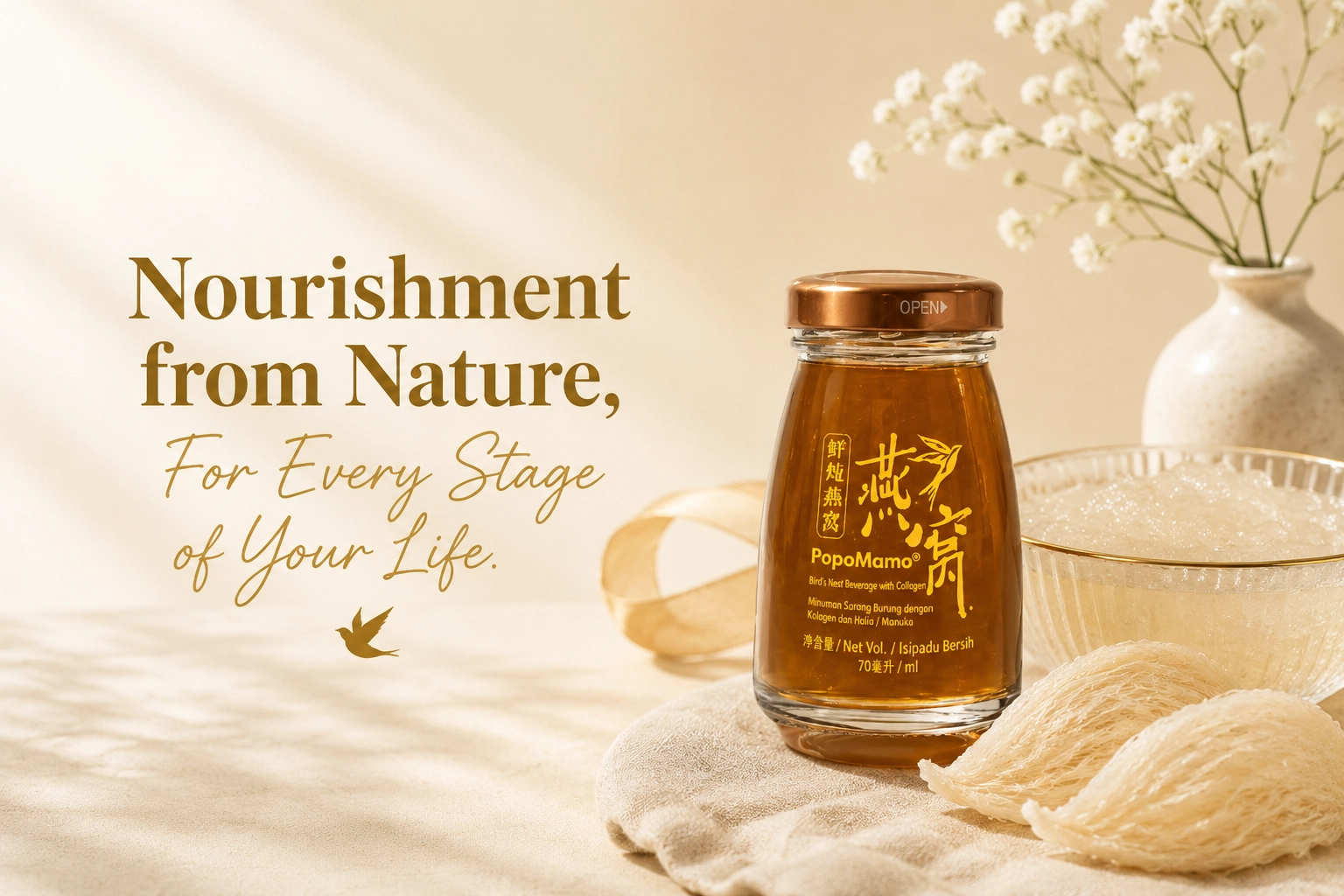
Bird's nest is available in several forms to suit different lifestyles. Traditional dried bird's nests require soaking and slow cooking, while ready-to-drink bird's nest beverages offer a convenient alternative for busy individuals. Some products also combine bird's nest with collagen, offering a convenient option for those looking to support their daily wellness routine.
Whether enjoyed warm or chilled, bird's nest is an easy way to add a touch of traditional nourishment to your daily wellness routine.
References
- Lee, T. H., Wani, W. A., Lee, C. H., Cheng, K. K., Shreaz, S., Wong, S., Hamdan, N., & Azmi, N. A. (2021). Edible Bird's Nest: The Functional Values of the Prized Animal-Based Bioproduct From Southeast Asia-A Review. Frontiers in Pharmacology, 12, 626233. https://doi.org/10.3389/fphar.2021.626233
- Marcone, M. F. (2005). Characterization of the edible bird's nest: The "Caviar of the East". Food Research International, 38(10), 1125–1134. https://doi.org/10.1016/j.foodres.2005.02.008
- Hamzah, Z., Ibrahim, N. H., Sarojini, J., Hussin, K., Hashim, O. H., & Lee, B. B. (2013). Nutritional properties of edible bird nest. Journal of Asian Scientific Research, 3(6), 600–607.
Written by: Syafiqah Aqilah, Registered Nutritionist (MAHPC)
Date: 7/7/2026
Frequently Asked Questions
For centuries, edible bird's nest (燕窝)has been enjoyed across Asia as a symbol of nourishment and wellbeing. Once reserved for emperors and royal families because of its rarity, it is now widely enjoyed as part of a healthy lifestyle.
Whether enjoyed as part of a daily wellness routine, during postpartum recovery, or simply as a nourishing delicacy, bird's nest continues to be valued across generations. So, what makes it so special?
In this article, we'll explore bird nest benefits, explain what is bird nest, and discuss why bird nest for postpartum remains a popular choice among new mothers.
What Is Bird Nest(燕窝)
Edible bird's nest has been part of Traditional Chinese Medicine (TCM) and Asian cuisine for hundreds of years. Unlike ordinary bird nests made from twigs and leaves, edible bird's nest is formed almost entirely from the hardened saliva of swiftlets, small birds found throughout Southeast Asia.
After harvesting, the nests are carefully cleaned before being prepared for consumption. Their delicate texture and mild taste make bird’s nest easy to enjoy either on its own or in convenient ready-to-drink products.
Edible bird's nests naturally come in white, yellow, and red varieties. Although red bird's nests are often considered more valuable, some researchers believe their colour develops from minerals absorbed from the cave walls where the nests are attached, rather than from the birds themselves.
Bird's nest naturally contains protein, carbohydrates, minerals, more than 20 amino acids, and bioactive compounds, all of which have attracted growing scientific interest in recent years.
Did you know? Bird's nest is often called the "Caviar of the East" because of its rarity, high value, and long-standing reputation as a premium health food.
Bird Nest Benefits
The nutritional profile of bird's nest has contributed to both its long history in TCM and growing interest in modern nutrition research. Although more human studies are needed, current evidence suggests several potential birdnest benefits.
A Favourite for Skin Health and Healthy Ageing
One of the most well-known bird nest benefits is its association with healthy-looking skin. Bird's nest contains epidermal growth factor (EGF)-like compounds that are being studied for their potential role in supporting skin repair and renewal. Together with its antioxidant properties, these compounds may help protect skin cells from oxidative stress associated with normal ageing.
May Support Immune Function
Bird's nest contains naturally occurring sialic acid, glycoproteins, and antioxidant compounds that have shown promising immune-supporting properties in laboratory and animal studies. These bioactive compounds may help support normal immune function and protect cells from oxidative stress, although more human studies are needed to confirm these effects.
Supports Tissue Repair and Recovery
As a natural source of protein and essential amino acids, bird's nest provides nutrients needed for normal tissue growth and repair. This is one reason bird's nest has traditionally been enjoyed during periods of recovery.
Traditionally Used for Respiratory and Digestive Wellness
In TCM, bird's nest has traditionally been used to support respiratory and digestive health. Historical records describe its traditional use for relieving dry coughs, soothing gastric discomfort, and supporting recovery from general weakness. While these traditional uses have been passed down for generations, modern clinical evidence remains limited.
Bird Nest for Postpartum
One of the most common traditional uses of edible bird's nest is bird nest for postpartum recovery.
Caring for a newborn can be physically and emotionally demanding, making good nutrition especially important after childbirth.
In many Asian cultures, bird's nest (马来西亚燕窝)has traditionally been included in confinement meals because it is considered a nourishing food. Today, many mothers continue this tradition by enjoying either traditional bird’s nest soup or convenient ready-to-drink products that fit more easily into their lifestyle.
Although research on bird nest for postpartum is still limited, it can be enjoyed as part of a healthy, balanced diet during the postpartum period. If you are pregnant or breastfeeding, consult your healthcare professional before introducing new supplements or functional foods into your diet.
How to Enjoy Bird's Nest
Bird's nest is available in several forms to suit different lifestyles. Traditional dried bird's nests require soaking and slow cooking, while ready-to-drink bird's nest beverages offer a convenient alternative for busy individuals. Some products also combine bird's nest with collagen, offering a convenient option for those looking to support their daily wellness routine.
Whether enjoyed warm or chilled, bird's nest is an easy way to add a touch of traditional nourishment to your daily wellness routine.
References
- Lee, T. H., Wani, W. A., Lee, C. H., Cheng, K. K., Shreaz, S., Wong, S., Hamdan, N., & Azmi, N. A. (2021). Edible Bird's Nest: The Functional Values of the Prized Animal-Based Bioproduct From Southeast Asia-A Review. Frontiers in Pharmacology, 12, 626233. https://doi.org/10.3389/fphar.2021.626233
- Marcone, M. F. (2005). Characterization of the edible bird's nest: The "Caviar of the East". Food Research International, 38(10), 1125–1134. https://doi.org/10.1016/j.foodres.2005.02.008
- Hamzah, Z., Ibrahim, N. H., Sarojini, J., Hussin, K., Hashim, O. H., & Lee, B. B. (2013). Nutritional properties of edible bird nest. Journal of Asian Scientific Research, 3(6), 600–607.
Written by: Syafiqah Aqilah, Registered Nutritionist (MAHPC)
Date: 7/7/2026