
{{ Interface.PageTitle }}
Feeling tired after a long day is completely normal. But if you're constantly low on energy, struggling to concentrate, or becoming breathless more easily than usual, your body could be trying to tell you something.
One possible reason is low iron, a common nutritional deficiency worldwide. Iron is an essential mineral that helps your body produce haemoglobin, a protein in red blood cells that carries oxygen throughout the body. When your iron levels are too low, your muscles and organs receive less oxygen, which can leave you feeling tired and lacking energy.
Women are especially at risk because iron is lost through menstruation each month, and iron requirements increase further during pregnancy and breastfeeding. According to the World Health Organization (WHO), iron deficiency remains one of the leading causes of anaemia worldwide, affecting millions of women and children.
While modern nutrition focuses on maintaining healthy iron levels through diet and supplementation when needed, Traditional Chinese Medicine (TCM) looks at fatigue from a broader perspective by emphasising the importance of nourishing qi and blood. Although these are different approaches, both aim to support energy, vitality, and overall wellbeing.
Iron Rich Foods for Better Energy
One of the best ways to support healthy iron levels is by eating a balanced diet that includes a variety of iron rich foods. Iron is essential for normal red blood cell production and oxygen transport, helping your body function at its best.
There are two main types of dietary iron. Haem iron, found in animal foods, is generally absorbed more efficiently than non-haem iron, which comes from plant-based foods. Both types contribute to your overall iron intake, especially when eaten as part of a varied diet.
| Iron Source | Examples |
| Haem iron | Lean beef, chicken liver, sardines, oysters |
| Non-haem iron | Spinach, tofu, lentils, beans, pumpkin seeds |
To improve the absorption of iron, pair iron rich foods with vitamin C-rich foods such as oranges, kiwi fruit, tomatoes, or capsicum.
Although a balanced diet is the best place to start, some people may still struggle to meet their iron needs through food alone. This is where iron supplementation may sometimes be recommended.
When Are Iron Tablets Needed?
If blood tests confirm iron deficiency, your healthcare professional may recommend iron tablets to help replenish your body's iron stores.
Iron tablets provide a concentrated source of iron and are often more effective than diet alone when iron stores are significantly depleted. However, they are not suitable for everyone and should only be taken under medical advice. Taking iron supplements unnecessarily is unlikely to improve your energy if iron deficiency isn't the cause of your tiredness.
Like many supplements, iron tablets may cause mild side effects in some people, including constipation, nausea, stomach discomfort, or dark stools. If these symptoms occur, speak with your healthcare professional rather than stopping treatment on your own.
Before deciding whether iron tablets are necessary, it's important to understand the difference between low iron and iron deficiency.
Low Iron: What Does It Mean?
Although the terms low iron and iron deficiency are often used interchangeably, they describe different stages of reduced iron status.
Low iron generally means your body's iron stores are beginning to decrease, although your red blood cell production may still be normal. At this stage, some people have no symptoms, while others may notice tiredness, headaches, reduced exercise tolerance, or difficulty concentrating.
Because women lose iron during menstruation, they are more likely to develop low iron than men. Heavy menstrual bleeding, pregnancy, breastfeeding, and diets that are low in iron can further increase the risk.
Recognising low iron early is important because, if left untreated, it may gradually progress to iron deficiency.
Iron Deficiency: More Than Just Feeling Tired
Iron deficiency occurs when the body's iron stores become too low to support normal red blood cell production. If left untreated, it may eventually lead to iron deficiency anaemia, reducing the amount of oxygen delivered throughout the body.
As a result, symptoms may become more noticeable and include persistent fatigue, dizziness, pale skin, shortness of breath, and difficulty concentrating. However, these symptoms can also have many other causes, which is why blood tests are needed to confirm iron deficiency.
Treatment depends on the underlying cause and may include increasing iron-rich foods, taking iron tablets, or addressing medical conditions that affect iron absorption or increase blood loss.
Alongside conventional treatment, many women are also interested in complementary ways to support their energy and overall wellbeing.
TCM Perspective: Nourishing Qi and Blood
In TCM, persistent fatigue is not explained solely by iron levels. Instead, practitioners assess the body's overall balance, particularly the strength of qi (vital energy) and the nourishment of blood.
Although blood deficiency in TCM is different from iron deficiency in Western medicine, the two may share similar symptoms, including tiredness, dizziness, poor concentration, and a pale complexion. Rather than focusing on a single nutrient, TCM aims to support the body's overall vitality through personalised herbal formulations, balanced nutrition, and healthy lifestyle habits.
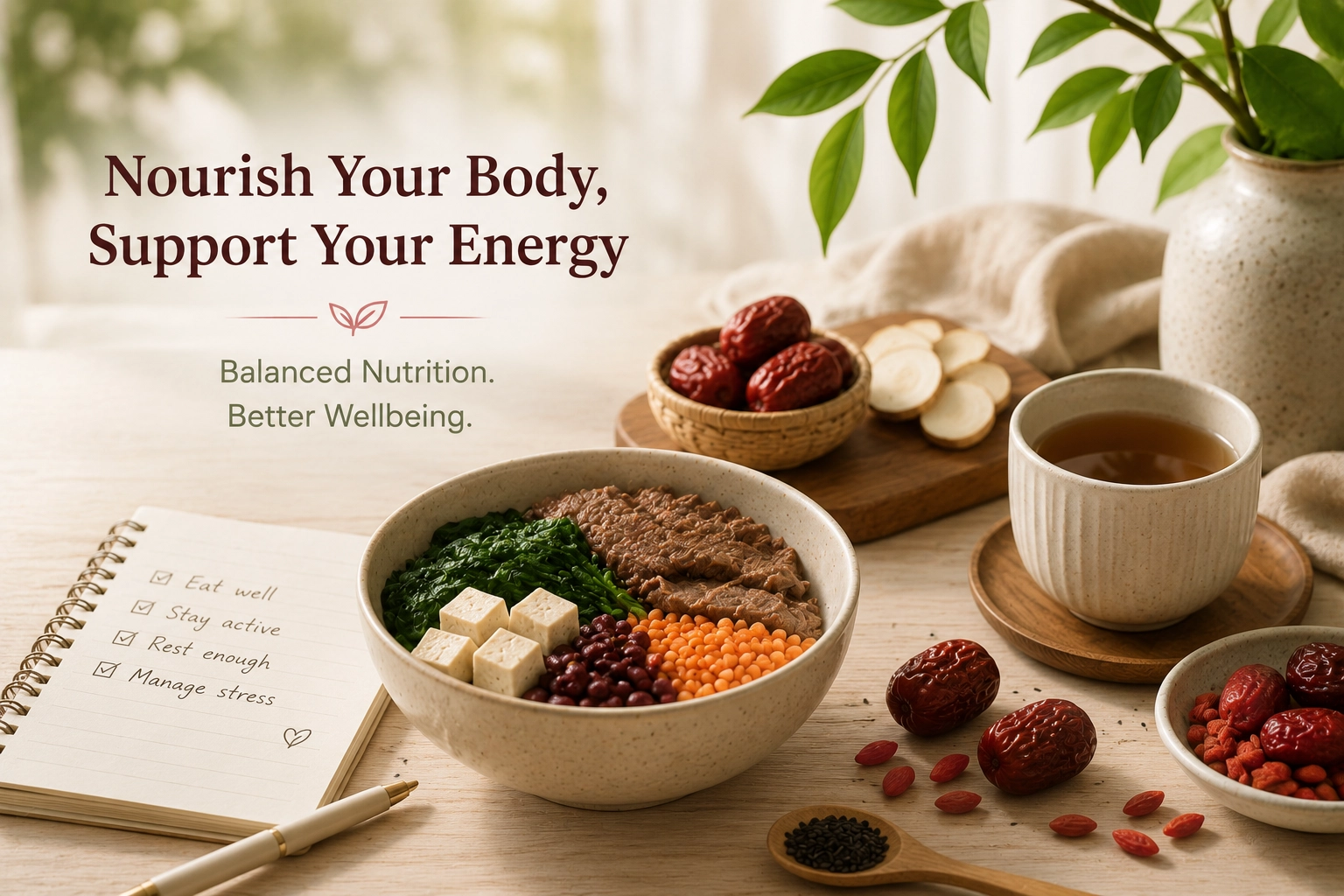
Interestingly, many foods encouraged in modern nutrition are also traditionally valued in TCM. Lean meat, eggs, and other iron-rich foods provide important nutrients, while ingredients such as red dates, goji berries, black sesame seeds, and Chinese yam have long been used to nourish qi and blood according to TCM principles. Traditional herbal formulations containing ingredients such as Red Dates are also traditionally used to support women's recovery and overall vitality.
Whether you follow modern nutrition principles or TCM, both approaches recognise that healthy habits form the foundation of good health. Eating a balanced diet, staying physically active, getting enough sleep, and managing stress all contribute to healthy energy levels. If you have been diagnosed with iron deficiency, follow your healthcare professional's treatment plan, while TCM-inspired foods and herbal products may complement your overall wellness routine under professional guidance.
References
- National Institutes of Health, Office of Dietary Supplements. (2024). Iron - Fact Sheet for Consumers. https://ods.od.nih.gov/factsheets/Iron-Consumer/
- World Health Organization. (2023). Anaemia. https://www.who.int/news-room/fact-sheets/detail/anaemia
- Bensky, D., Clavey, S., & Stöger, E. (2004). Chinese Herbal Medicine: Materia Medica (3rd ed.). Eastland Press.
- Harvard T. H. Chan School of Public Health. (2024). The Nutrition Source: Iron. https://www.hsph.harvard.edu/nutritionsource/iron/
- World Health Organization, & Food and Agriculture Organization of the United Nations. (2004). Vitamin and mineral requirements in human nutrition (2nd ed.). World Health Organization. https://iris.who.int/handle/10665/42716
Written by: Syafiqah Aqilah, Registered Nutritionist (MAHPC)
Date: 17/7/2026
Internal links
- Persistent fatigue - link with Article 6. Qi Deficiency