

{{ Interface.PageTitle }}
Have you ever had to cancel plans, skip a workout, or curl up in bed because your period cramps were simply too painful? If so, you're not alone. Studies estimate that around 71.3% women worldwide experience period pain during their reproductive years, making it one of the most common women's health concerns.¹
While mild discomfort is common, some women experience pain severe enough to affect work, school, exercise, and daily activities. The good news is that understanding why period cramps happen and knowing how to manage them can help you feel more comfortable every month.
Menstrual Cramps
Menstrual cramps, or medically known as dysmenorrhea are the aching or cramping pains that occur before or during your period. They happen because the uterus contracts to shed its lining each month. These contractions are triggered by hormone-like substances called prostaglandins. Higher prostaglandin levels can cause stronger uterine contractions, leading to more painful cramps.
Besides lower abdominal pain, menstrual cramps may also be accompanied by:
- Lower back pain
- Pain that spreads to the thighs
- Bloating
- Fatigue
- Headaches
- Nausea
For most women, the pain improves within one to three days. However, if your cramps are severe, become worse over time, or regularly interfere with your daily routine, it's important to seek medical advice. Conditions such as endometriosis or adenomyosis may also cause painful periods and require proper assessment.
How to Reduce Period Pain
If you've ever searched for how to reduce period pain, you're certainly not alone. While every woman is different, these simple lifestyle habits may help ease discomfort naturally.
- Get enough sleep and rest. Your body works hard during period, and quality sleep supports recovery while helping you better cope with discomfort.
- Exercise regularly. Gentle activities such as walking, stretching, yoga, or Pilates improve blood circulation and encourage the release of endorphins—your body's natural pain relievers. Staying active may also help reduce menstrual cramps over time.
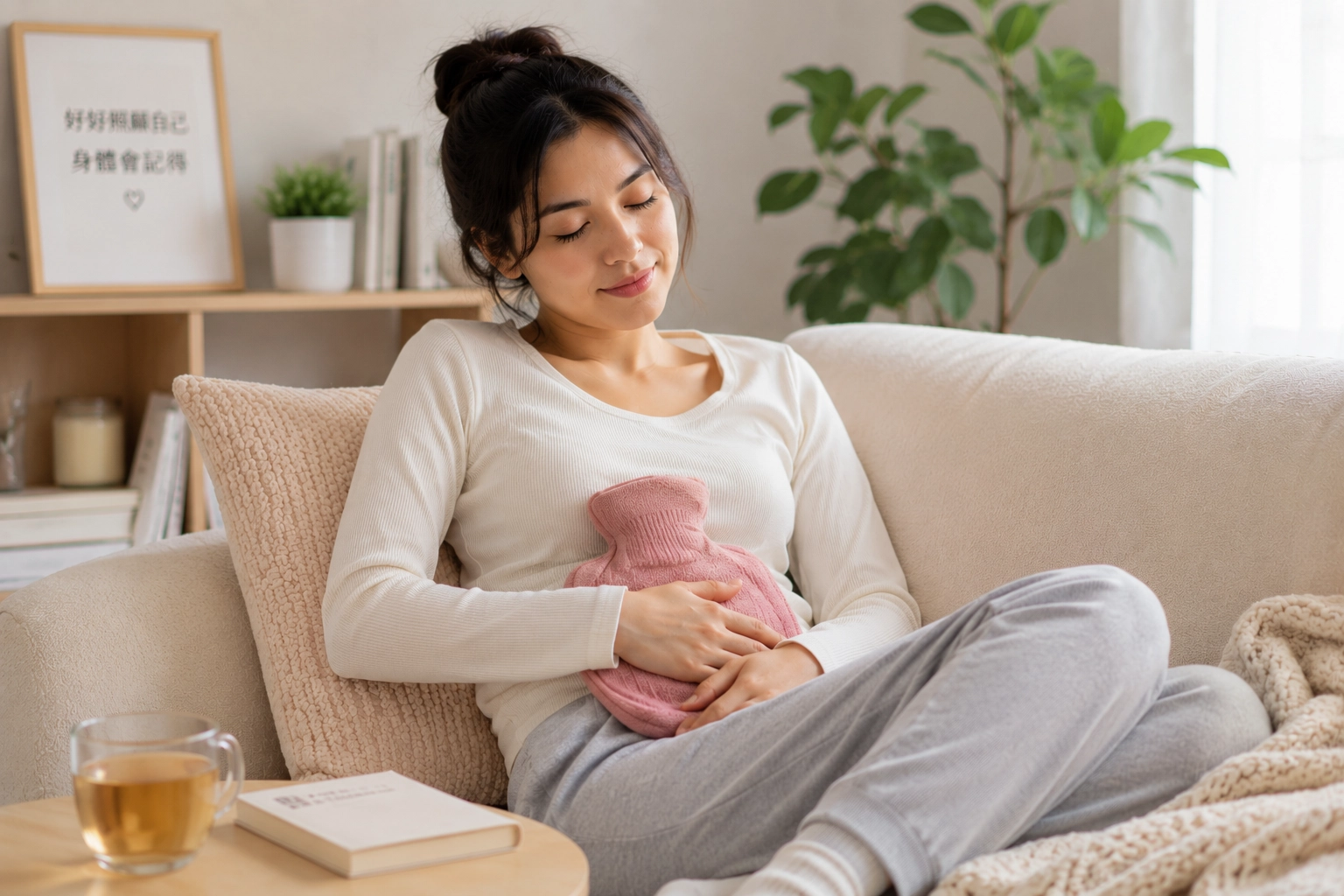
- Use heat. Applying a heating pad, or heat patch to your lower abdomen can relax the uterine muscles and ease cramping. A warm bath may also provide soothing relief.
- Eat a balanced diet and stay hydrated. Nutritious meals that include fruits, vegetables, whole grains, and iron-rich foods support overall period health, while drinking enough water may help reduce bloating.
- Reduce stress. Psychological stress may increase both the likelihood and severity of menstrual cycle pain. Taking time to relax through deep breathing, meditation, or activities you enjoy may help improve both physical and emotional wellbeing.
If you're wondering how to reduce period pain over the long term, remember that looking after your health throughout the month, not just during your period can make a meaningful difference.
Menstrual Cycle Pain
Although cramps occur during period, menstrual cycle pain is often influenced by what happens throughout your entire cycle.
Factors such as sleep, stress, nutrition, exercise, and overall health can all affect how your body feels when your next period arrives. Keeping a period diary or using a period tracking app may help you recognise patterns and identify triggers that make your pain worse.
By understanding your body's rhythm, you can make small lifestyle adjustments before your next period begins instead of only reacting once the cramps start. Looking after your health throughout your menstrual cycle is one of the best ways to support long-term menstrual wellbeing.
References
- G. T. de Arruda et al.(2026). Worldwide prevalence of dysmenorrhea: A systematic review and meta-analysis across 70 countries. International Association for the Study of Pain. PAIN (41–55).
Written by,
Safiah Latif
Registered Nutritionist (MAHPC)
Date: 2 July 2026