

{{ Interface.PageTitle }}
Have you ever wondered why some months your period cramps feel manageable, while other months they leave you curled up with a heat pack, counting down the hours until the pain eases?
You're not alone. Menstrual cramps affect millions of women every month, and while a heating pad or rest may help, many women are also exploring whether magnesium for menstrual cramps could become part of a healthier, long-term approach to cycle wellness.
Magnesium is an essential mineral involved in hundreds of processes throughout the body, including muscle function, nerve signalling, and energy production. Because the uterus is a muscle, researchers have been studying whether magnesium may help support women who experience period discomfort.
Let's explore why this essential mineral is receiving so much attention—and how it may support your menstrual health.
Menstrual Cramps Pain Relief
Period cramps happen because your uterus contracts to shed its lining during menstruation. These contractions are triggered by natural chemicals called prostaglandins. Higher prostaglandin levels often lead to stronger contractions and, for some women, more intense pain.
When looking for menstrual cramps pain relief, there isn't one perfect solution that works for everyone. Instead, combining several healthy habits often produces the best results.
Many women find relief by:
- Applying a warm heating pad
- Going for a gentle walk or doing light stretching
- Staying well hydrated
- Getting enough sleep
- Eating a balanced diet rich in whole foods
- Managing everyday stress
Researchers have also investigated magnesium for menstrual cramps because magnesium is an essential mineral that supports normal muscle and nerve function and plays a role in hundreds of biochemical processes throughout the body.¹ Since the uterus is a muscle, maintaining adequate magnesium levels may help support normal muscle relaxation and healthy uterine contractions. Some studies suggest this may contribute to reducing menstrual discomfort in certain women, although more high-quality research is still needed.²˒³
Rather than being a quick fix, magnesium works best as part of a consistent, healthy lifestyle.
Supplement for Period Cramps
While eating a balanced diet should always come first, some women may not get enough magnesium from food alone. In these situations, a supplement for period cramps may be considered after discussing it with a healthcare professional.
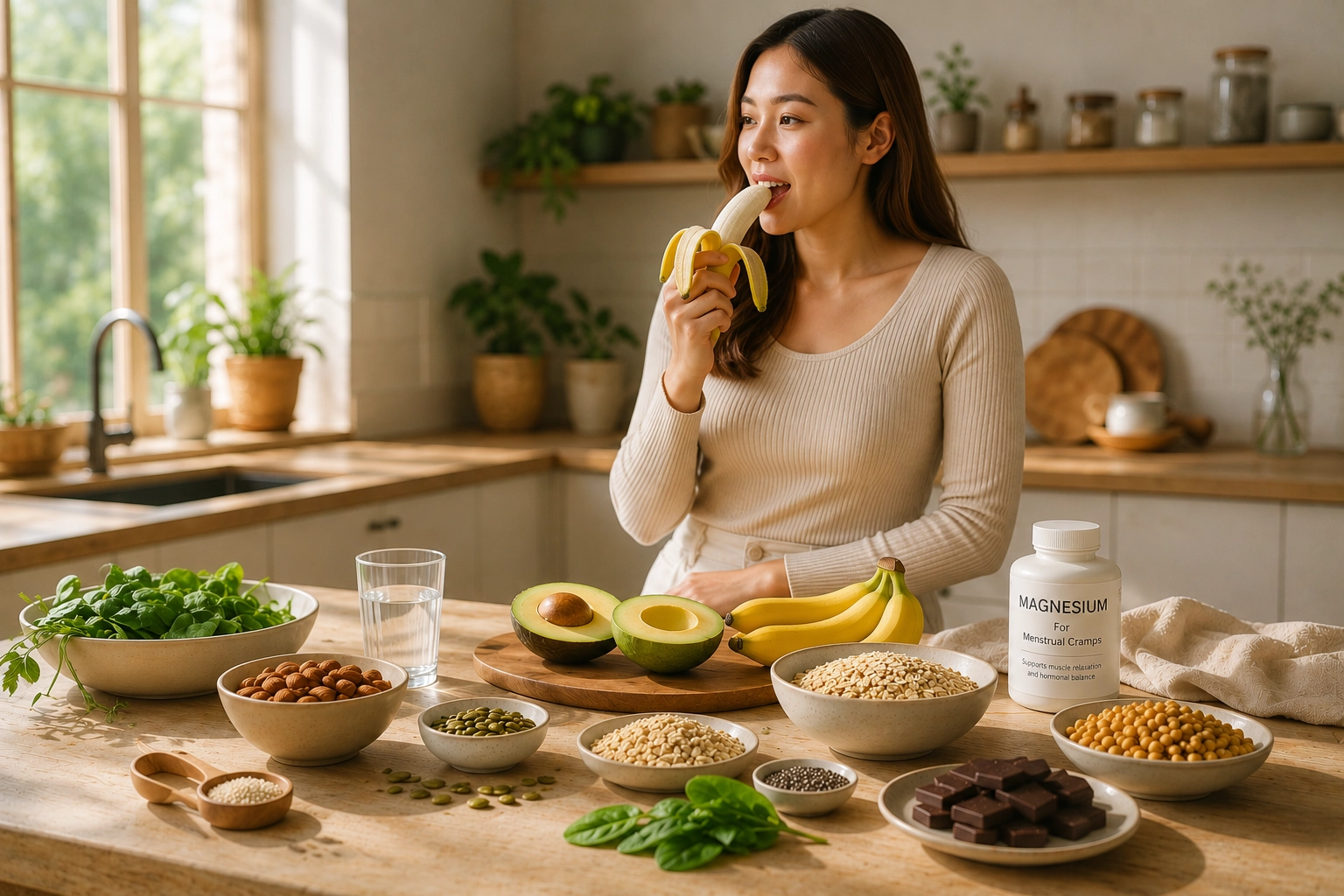
Magnesium is naturally found in many everyday foods, including:
- Dark leafy vegetables
- Nuts and seeds
- Whole grains
- Legumes
- Avocados
- Bananas
- Dark chocolate
If you're considering a supplement for period cramps, remember that supplements are designed to complement a healthy diet—not replace one.
Many women choose to combine magnesium with regular exercise, nutritious meals, quality sleep, and stress management to better support their menstrual cycle over time.
As always, speak with your doctor or pharmacist before starting any supplement, especially if you're pregnant, breastfeeding, taking medication, or have an existing medical condition.
Small Daily Habits Matter More Than You Think
Supporting your period doesn't begin on the first day of bleeding—it starts with how you care for your body every day.
Small habits such as eating nourishing foods, staying active, sleeping well, and managing stress all contribute to better menstrual health. If magnesium intake is appropriate for you, it may become another valuable part of your monthly wellness routine.
Every woman's body is different, so finding the combination of habits that works best for you is the key to long-term cycle wellness.
Medical Disclaimer: This article is for educational purposes only and should not replace professional medical advice. If your menstrual cramps are severe, suddenly worsen, or interfere with your daily life, consult a qualified healthcare professional for proper evaluation and treatment.
Reference
- National Institutes of Health, Office of Dietary Supplements. (2026). Magnesium: Fact sheet for health professionals.
- Parazzini, F., Di Martino, M., & Pellegrino, P. (2017). Magnesium in the gynecological practice: a literature review. Magnesium research, 30 1, 1-7 .
Written by: Safiah Latif, Registered Nutritionist (MAHPC), 7/7/2026
Frequently Asked Questions
Have you ever wondered why some months your period cramps feel manageable, while other months they leave you curled up with a heat pack, counting down the hours until the pain eases?
You're not alone. Menstrual cramps affect millions of women every month, and while a heating pad or rest may help, many women are also exploring whether magnesium for menstrual cramps could become part of a healthier, long-term approach to cycle wellness.
Magnesium is an essential mineral involved in hundreds of processes throughout the body, including muscle function, nerve signalling, and energy production. Because the uterus is a muscle, researchers have been studying whether magnesium may help support women who experience period discomfort.
Let's explore why this essential mineral is receiving so much attention—and how it may support your menstrual health.
Menstrual Cramps Pain Relief
Period cramps happen because your uterus contracts to shed its lining during menstruation. These contractions are triggered by natural chemicals called prostaglandins. Higher prostaglandin levels often lead to stronger contractions and, for some women, more intense pain.
When looking for menstrual cramps pain relief, there isn't one perfect solution that works for everyone. Instead, combining several healthy habits often produces the best results.
Many women find relief by:
- Applying a warm heating pad
- Going for a gentle walk or doing light stretching
- Staying well hydrated
- Getting enough sleep
- Eating a balanced diet rich in whole foods
- Managing everyday stress
Researchers have also investigated magnesium for menstrual cramps because magnesium is an essential mineral that supports normal muscle and nerve function and plays a role in hundreds of biochemical processes throughout the body.¹ Since the uterus is a muscle, maintaining adequate magnesium levels may help support normal muscle relaxation and healthy uterine contractions. Some studies suggest this may contribute to reducing menstrual discomfort in certain women, although more high-quality research is still needed.²˒³
Rather than being a quick fix, magnesium works best as part of a consistent, healthy lifestyle.
Supplement for Period Cramps
While eating a balanced diet should always come first, some women may not get enough magnesium from food alone. In these situations, a supplement for period cramps may be considered after discussing it with a healthcare professional.
Magnesium is naturally found in many everyday foods, including:
- Dark leafy vegetables
- Nuts and seeds
- Whole grains
- Legumes
- Avocados
- Bananas
- Dark chocolate
If you're considering a supplement for period cramps, remember that supplements are designed to complement a healthy diet—not replace one.
Many women choose to combine magnesium with regular exercise, nutritious meals, quality sleep, and stress management to better support their menstrual cycle over time.
As always, speak with your doctor or pharmacist before starting any supplement, especially if you're pregnant, breastfeeding, taking medication, or have an existing medical condition.
Small Daily Habits Matter More Than You Think
Supporting your period doesn't begin on the first day of bleeding—it starts with how you care for your body every day.
Small habits such as eating nourishing foods, staying active, sleeping well, and managing stress all contribute to better menstrual health. If magnesium intake is appropriate for you, it may become another valuable part of your monthly wellness routine.
Every woman's body is different, so finding the combination of habits that works best for you is the key to long-term cycle wellness.
Medical Disclaimer: This article is for educational purposes only and should not replace professional medical advice. If your menstrual cramps are severe, suddenly worsen, or interfere with your daily life, consult a qualified healthcare professional for proper evaluation and treatment.
Reference
- National Institutes of Health, Office of Dietary Supplements. (2026). Magnesium: Fact sheet for health professionals.
- Parazzini, F., Di Martino, M., & Pellegrino, P. (2017). Magnesium in the gynecological practice: a literature review. Magnesium research, 30 1, 1-7 .
Written by: Safiah Latif, Registered Nutritionist (MAHPC), 7/7/2026